
Best Dog Puzzle Toys
Dog puzzle toys sound like one simple category until you try to choose one that actually fits your dog. Some puzzle toys are better for beginners, some are more rewarding for dogs that already understand treat games, some work more like slow feeders, and some are best because they create a more playful hide-and-seek experience than a hard plastic puzzle board. The biggest mistake in this category is assuming every puzzle toy gives the same kind of challenge.
This page focuses on practical puzzle toy picks for real use: beginner-friendly puzzles, rotating treat puzzles, plush hide-and-seek toys, advanced challenge boards, and more premium multi-step enrichment options. The goal is not to push one generic answer. It is to help you choose a puzzle toy that actually matches your dog’s experience level, motivation, play style, and how much mental work you really want the toy to provide.
Top Picks for Dog Puzzle Toys
These seven options cover the main buying situations that usually matter most in this category: best overall, best budget pick, best rotating puzzle option, best plush puzzle toy, best advanced puzzle, best premium multi-step option, and best for beginners.
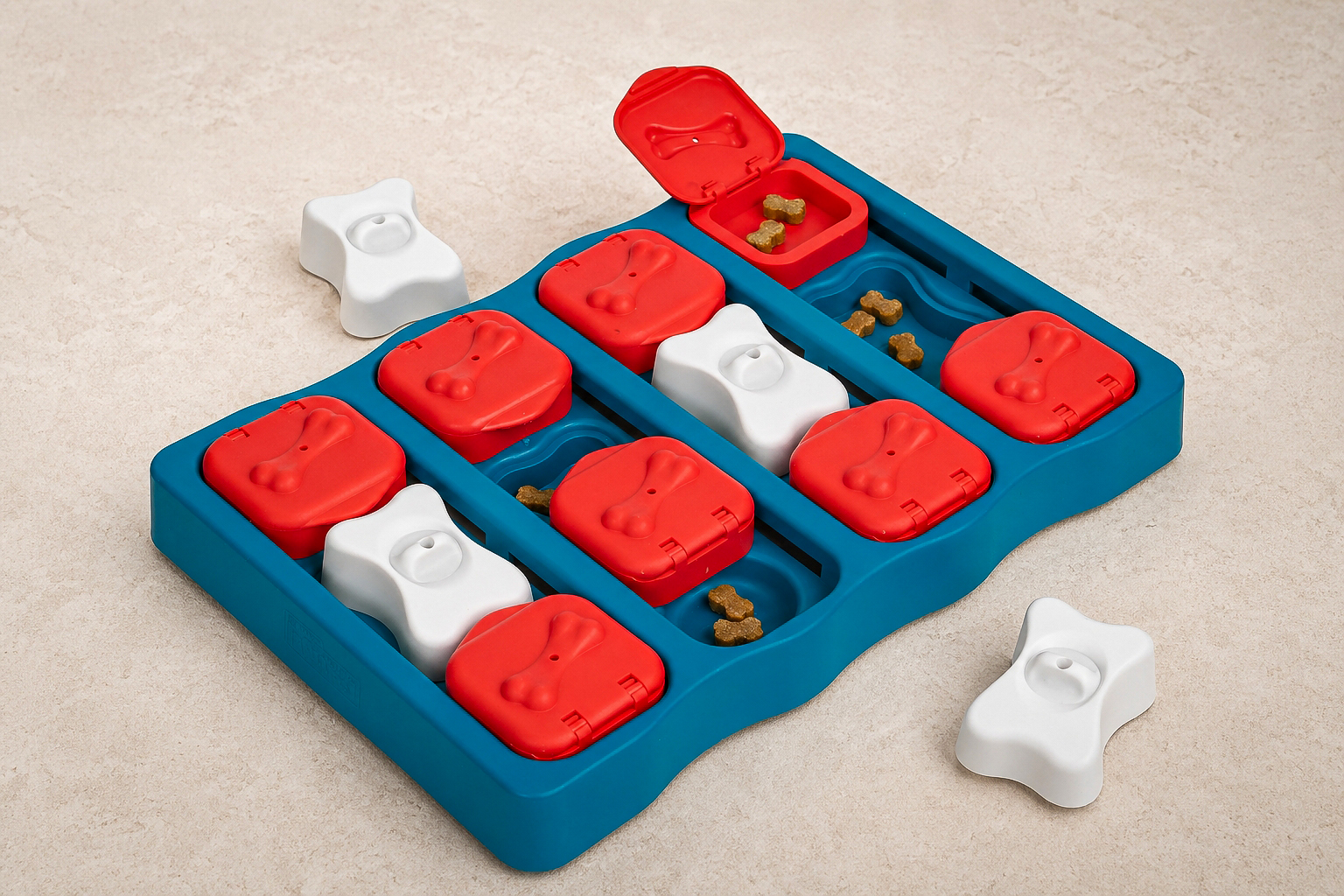
Nina Ottosson Dog Brick Puzzle
Best Overall. A strong all-around starting point for most owners who want a puzzle that feels more substantial than a basic beginner board without jumping straight into the hardest options.
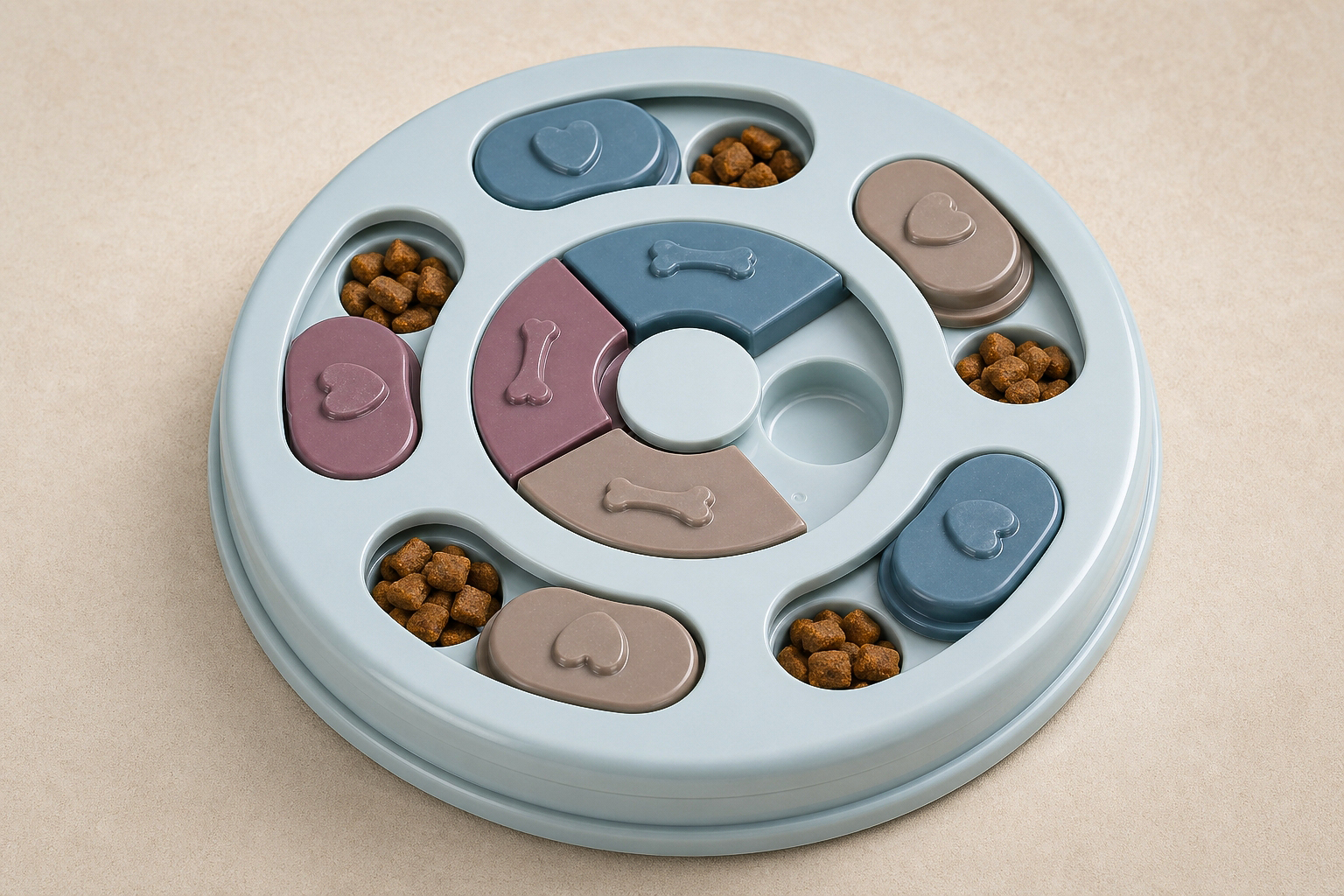
Puzzle Feeder Dog Toy
Best Budget Pick. A lower-cost entry point for buyers who want to try puzzle-style enrichment without paying up for a more premium branded board first.
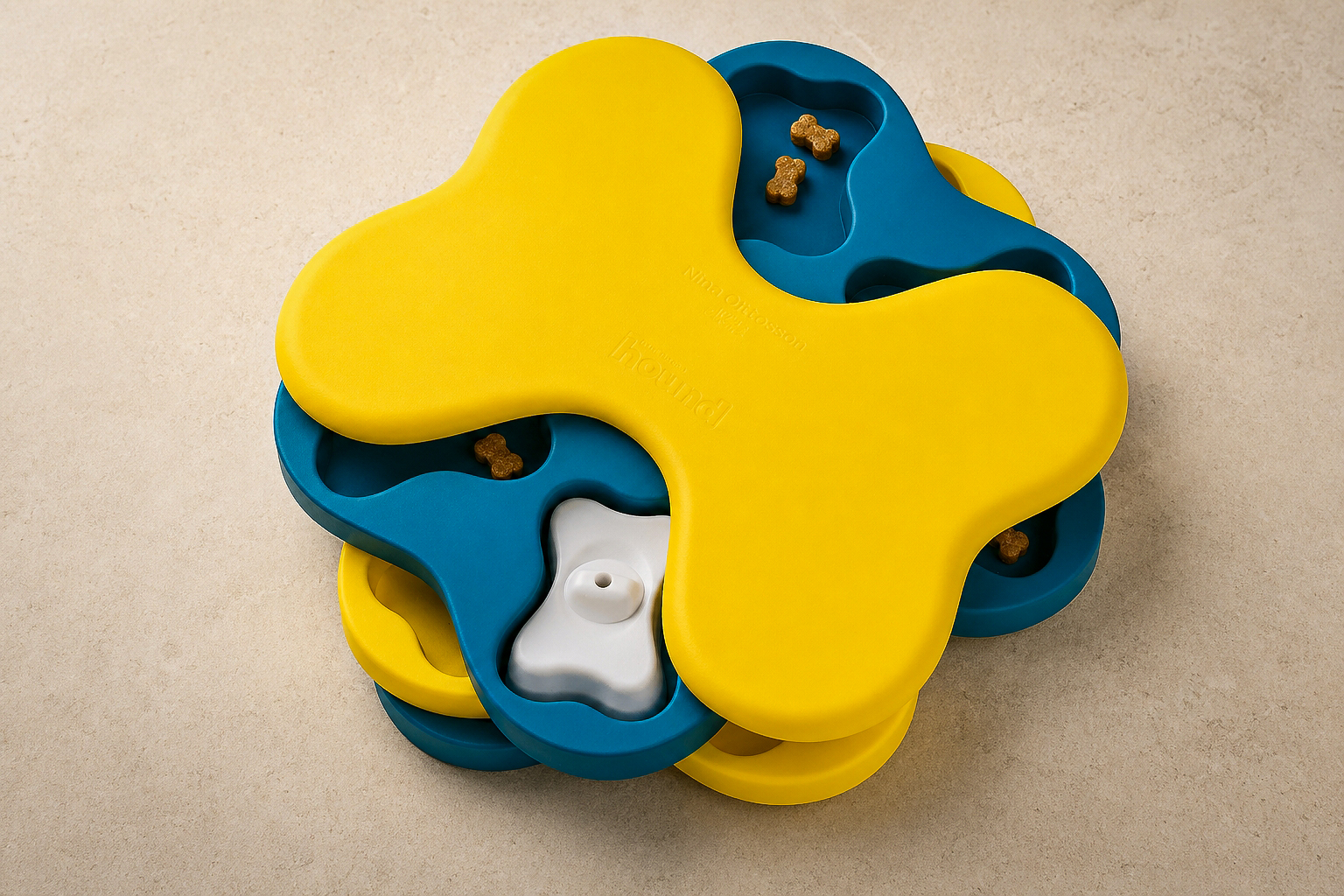
Nina Ottosson Dog Tornado Puzzle
Best Rotating Puzzle Option. A better fit for dogs that enjoy moving parts and active paw work instead of only lifting or sliding pieces.
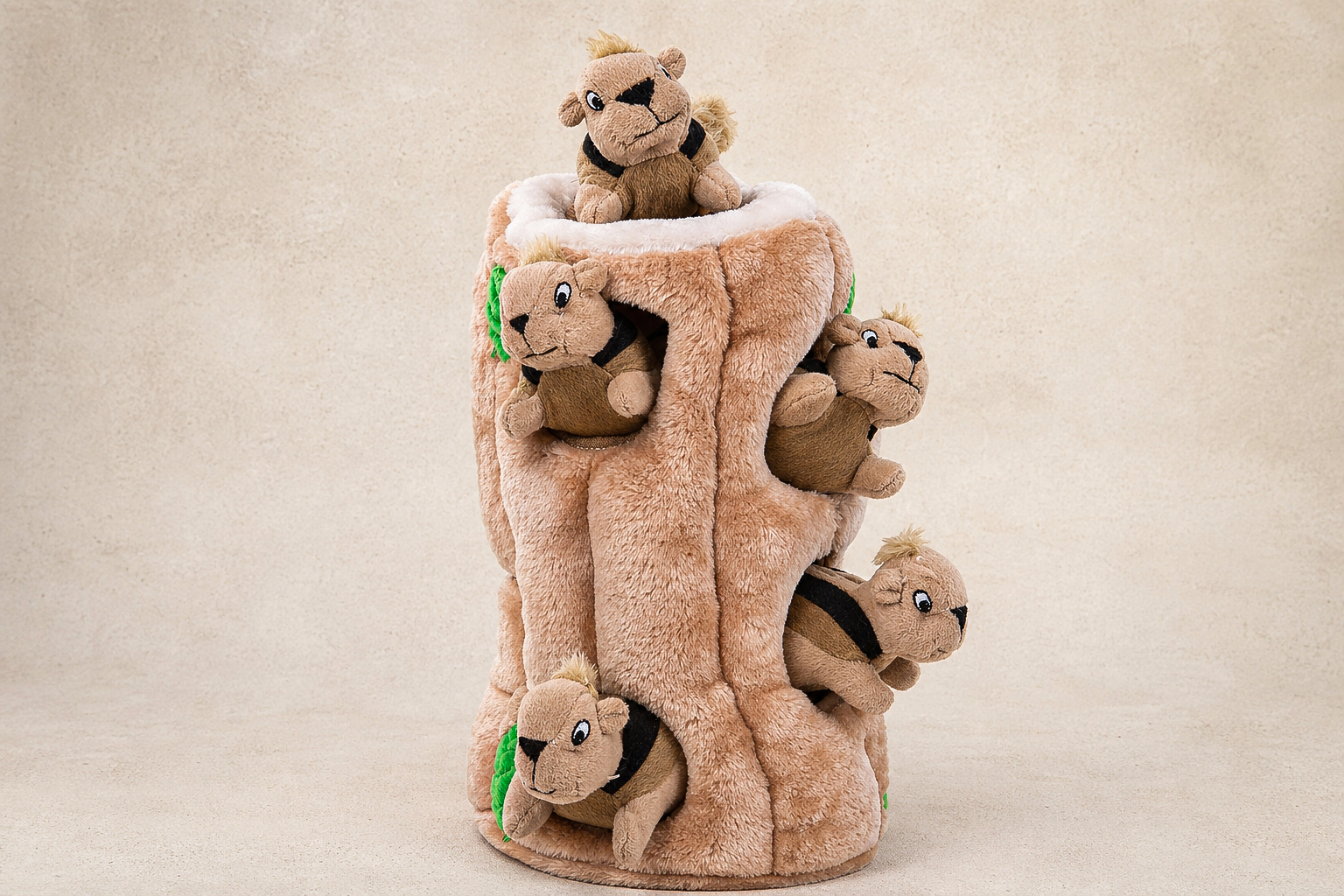
Hide A Squirrel Plush Puzzle
Best Plush Puzzle Toy. A better route for dogs that engage more with searching, sniffing, and playful problem-solving than with rigid plastic puzzle boards.
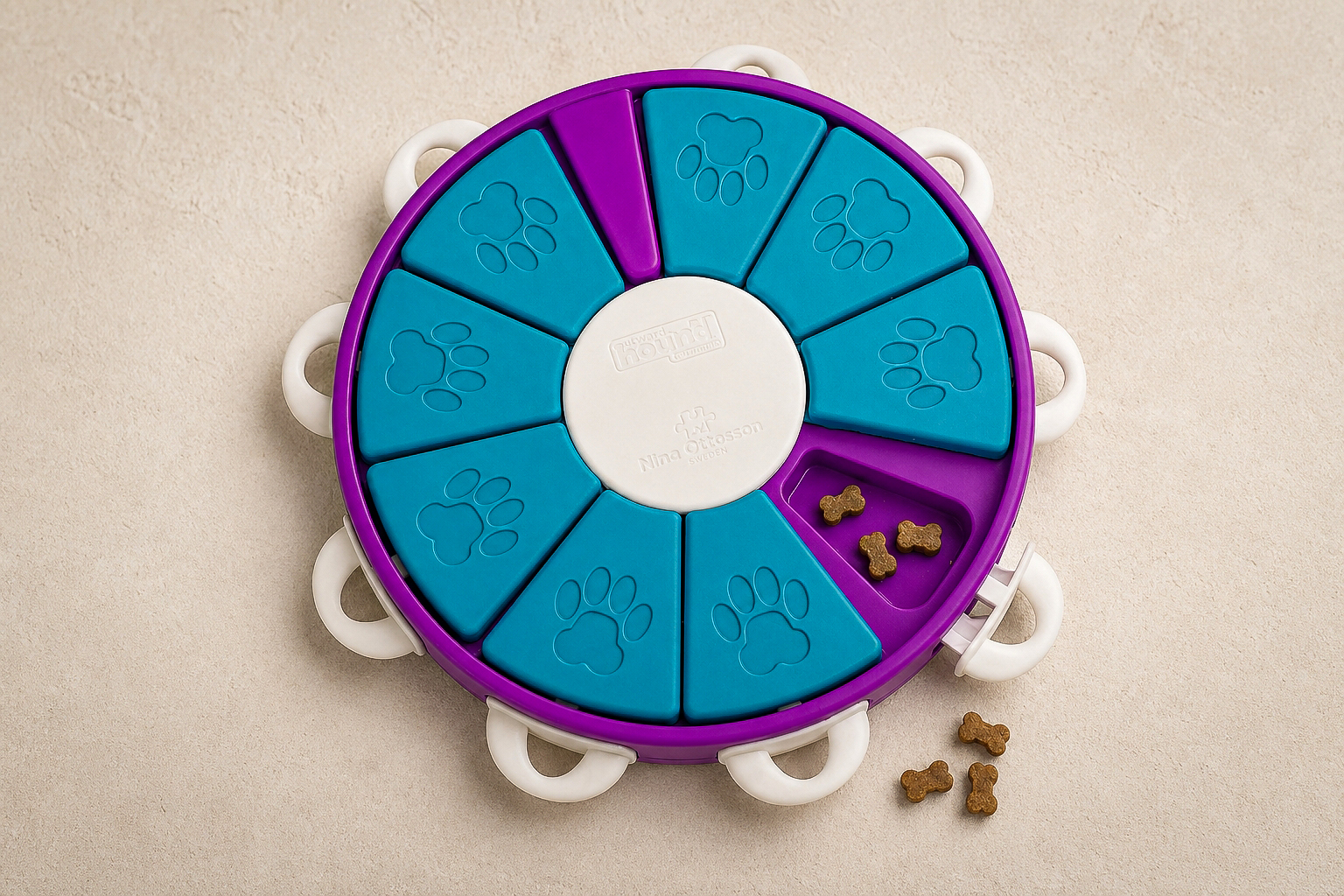
Nina Ottosson Dog Twister Puzzle
Best Advanced Puzzle. A stronger fit for buyers who know their dog already understands easier puzzles and needs a more challenging next step.
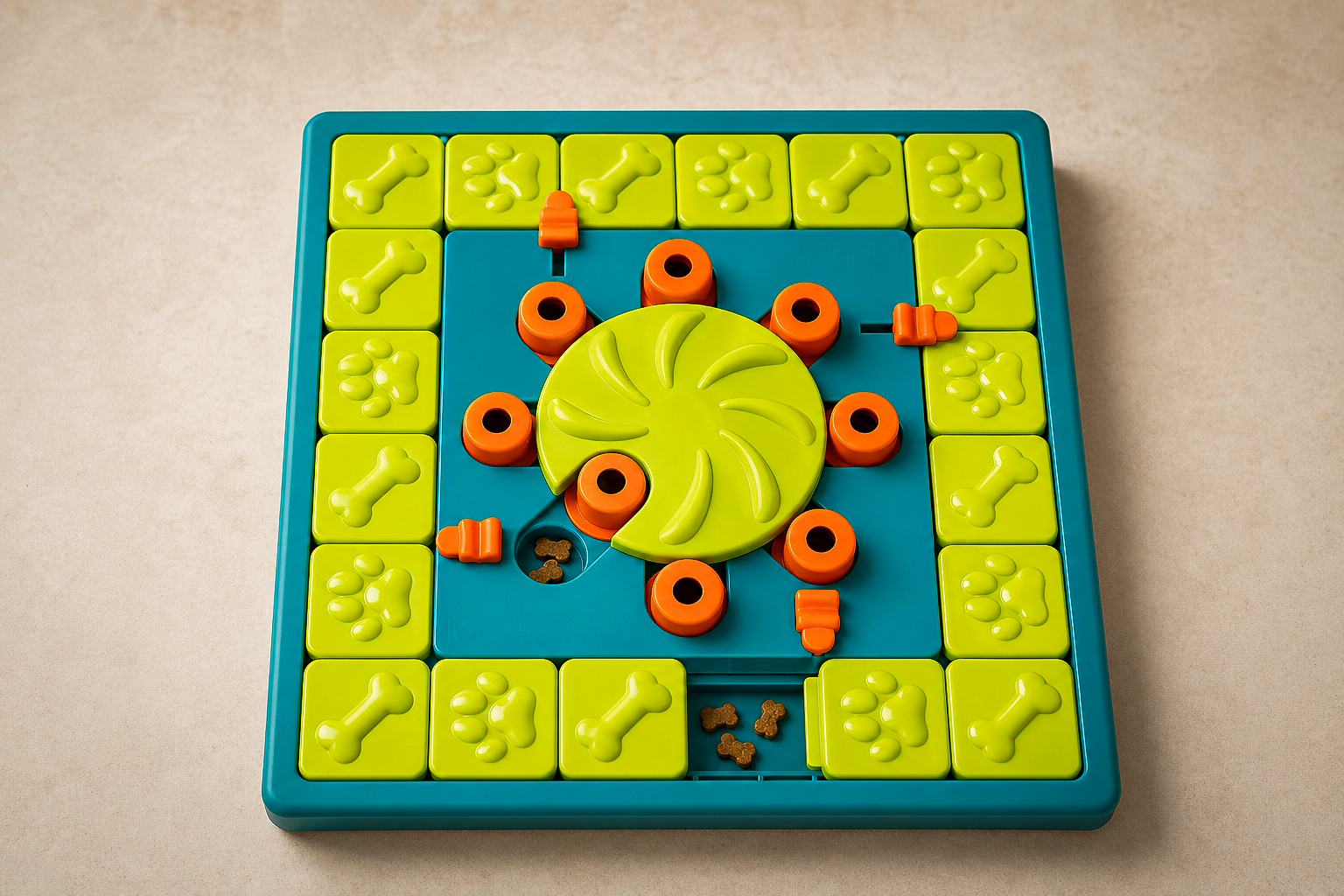
Nina Ottosson MultiPuzzle
Best Premium Multi-Step Option. A stronger premium route for buyers who want a more layered, more involved puzzle challenge than the simpler entry-level boards.
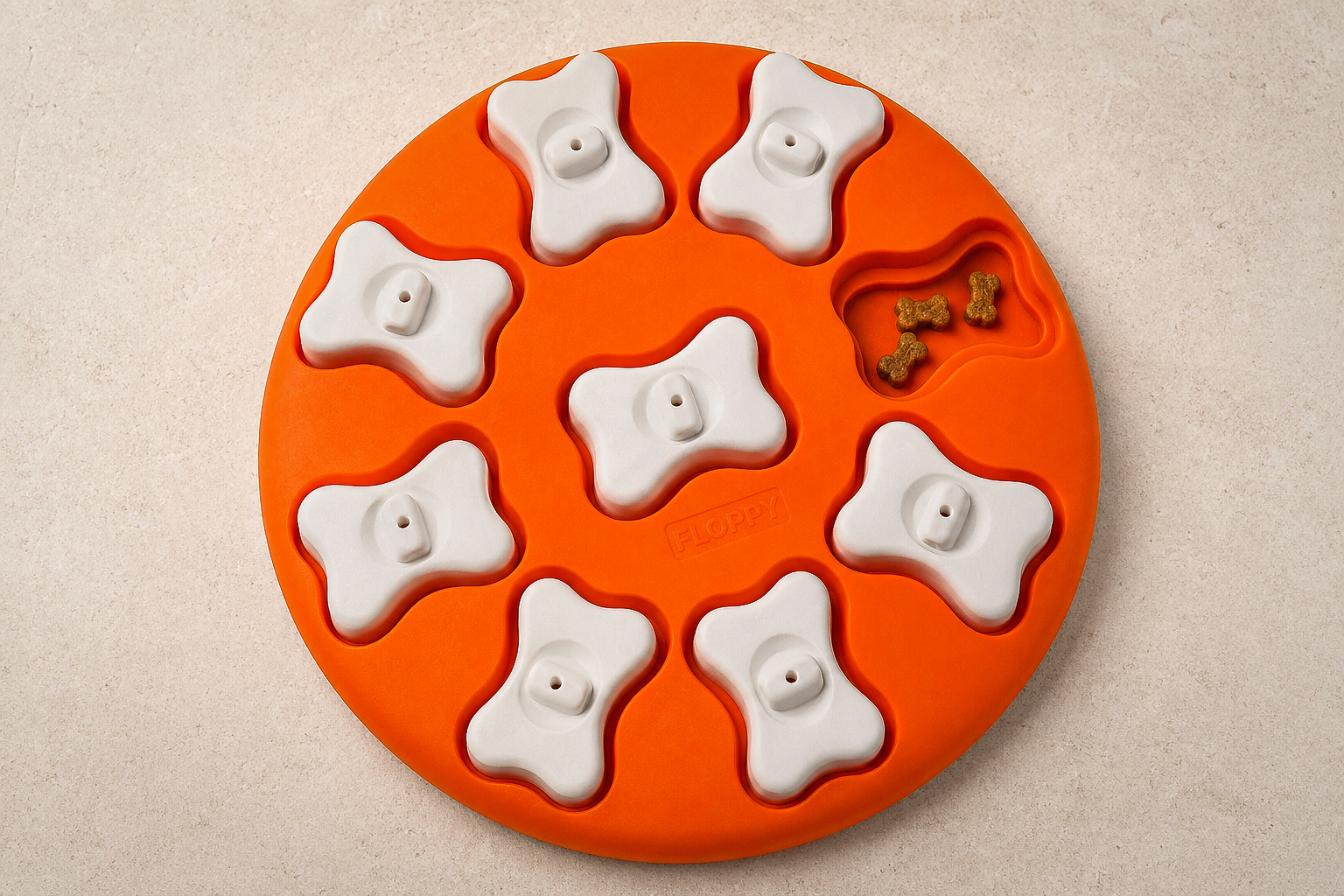
Nina Ottosson Dog Smart Puzzle
Best for Beginners. A cleaner first puzzle for dogs that are new to treat boards and need a more approachable starting point.
Quick Comparison Matrix
| Product | Best For | Puzzle Type | Difficulty Feel | Dog Skill Level | Main Interaction Style | Main Strength | Amazon |
|---|---|---|---|---|---|---|---|
| Nina Ottosson Dog Brick Puzzle | Most owners | Treat board puzzle | Moderate | Beginner to intermediate | Lifting and sliding | Strong overall balance | View |
| Puzzle Feeder Dog Toy | Budget-conscious buyers | Feeder-style puzzle | Easy to moderate | Beginner | Treat seeking and pawing | Lower-cost enrichment entry | View |
| Nina Ottosson Dog Tornado Puzzle | Dogs that like moving parts | Rotating puzzle | Moderate | Beginner to intermediate | Spinning and paw work | More active interaction style | View |
| Hide A Squirrel Plush Puzzle | Search-and-find play | Plush hide-and-seek toy | Easy to moderate | Broad appeal | Searching and pulling | Playful plush puzzle format | View |
| Nina Ottosson Dog Twister Puzzle | Experienced puzzle dogs | Advanced puzzle board | Higher | Intermediate to advanced | Twisting and problem-solving | Stronger challenge level | View |
| Nina Ottosson MultiPuzzle | Buyers wanting more complexity | Multi-step puzzle board | Higher | Intermediate to advanced | Layered treat discovery | Premium multi-step challenge | View |
| Nina Ottosson Dog Smart Puzzle | Puzzle beginners | Entry-level puzzle board | Easy | Beginner | Simple treat discovery | Cleaner learning curve | View |
How We Picked These Dog Puzzle Toys
1. Use-case fit came first
We did not treat every puzzle toy like it solved the same enrichment problem. The first filter was whether the toy made sense for a real buyer need: beginner puzzle work, rotating puzzle play, plush search games, or a more advanced challenge.
2. Safe bestseller bias
The page leans toward mainstream, conversion-friendly puzzle toys with stronger buyer trust than random generic listings that all use the same enrichment language without the same credibility.
3. Different puzzle roles, not seven clones
Instead of listing seven very similar plastic boards, this page separates real puzzle-toy roles: broad all-around use, budget entry, rotating interaction, plush hide-and-seek, advanced challenge, premium multi-step work, and beginner learning.
4. Everyday usability mattered
A puzzle toy has to be realistic to use with normal treats, normal supervision, and normal dog patience. Practical use mattered more than inflated “genius dog” marketing.
Best Dog Puzzle Toy Options Explained
Nina Ottosson Dog Brick Puzzle
This is the strongest all-around starting point for most owners because it feels like a real puzzle toy without becoming too simple or too frustrating. It sits in a useful middle ground where the dog has to work a bit, but most motivated dogs can still understand the game after some exposure.
It makes the most sense for owners who want one puzzle toy that can feel rewarding, a little challenging, and still practical for normal weekly enrichment use.
- Best overall puzzle toy
- Strong balance between accessibility and challenge
- Good all-around entry for many dogs
Puzzle Feeder Dog Toy
This is the cleaner budget entry point for owners who want to test puzzle-style enrichment without paying up for a more established branded puzzle first. It makes sense when your main goal is seeing whether the dog even responds well to treat puzzles at all.
If value matters more than getting the strongest premium board on day one, this is one of the most logical places to start.
- Best budget pick
- Lower-cost entry into puzzle toys
- Good for testing puzzle interest first
Nina Ottosson Dog Tornado Puzzle
This is the better route when the dog enjoys more active physical interaction with a toy rather than only lifting or sliding basic compartments. The rotating format changes the feel of the puzzle enough that some dogs find it more engaging than flatter board-style options.
It is a stronger fit for dogs that enjoy movement, paw work, and a slightly more dynamic puzzle experience.
- Best rotating puzzle option
- Good for dogs that like active interaction
- More dynamic than a basic flat board
Hide A Squirrel Plush Puzzle
This is the better puzzle route when the dog responds more to playful searching and toy extraction than to hard plastic treat compartments. It solves a different problem than a treat board. It is less about mechanical food work and more about playful problem-solving.
That makes it especially useful for dogs that love soft toys, sniffing, and the small reward loop of finding and pulling out pieces.
- Best plush puzzle toy
- Good for search-and-find play
- Better for dogs that enjoy soft toy interaction
Nina Ottosson Dog Twister Puzzle
This is the stronger choice when the dog has already outgrown easier puzzle toys and needs something that asks for more patience and more intentional problem-solving. It makes less sense as a first-ever puzzle, but much more sense as a real progression step.
It earns its place because advanced puzzle buyers usually want challenge, not just more compartments.
- Best advanced puzzle
- Stronger fit for experienced puzzle dogs
- Useful next step after easier puzzles
Nina Ottosson MultiPuzzle
This is the premium multi-step route for buyers who want a more layered enrichment toy and do not mind spending more for a more elaborate challenge. It is less about being the easiest everyday pick and more about giving highly puzzle-motivated dogs more to work through.
It makes the most sense for owners who already know their dog enjoys puzzle boards and want a stronger “next level” style option.
- Best premium multi-step option
- More layered challenge structure
- Better for dogs already interested in puzzles
Nina Ottosson Dog Smart Puzzle
This is the cleaner first puzzle for dogs that are new to enrichment boards and for owners who do not want to start with too much difficulty right away. A beginner puzzle only works if it feels rewarding enough for the dog to understand the game and want to keep trying.
That is exactly why it belongs on the page. Some dogs need a clean low-friction first win before more advanced puzzle toys make sense.
- Best for beginners
- Cleaner learning curve
- Better first step into treat puzzles
Best for Specific Dog Puzzle Toy Situations
Best for Most Dogs
If you want one puzzle toy that feels more substantial than a basic starter toy but does not jump straight into harder frustration territory, the Dog Brick is the cleanest starting point.
Best fit to start with: Nina Ottosson by Outward Hound Dog Brick Puzzle
Best for Budget Entry-Level Enrichment
If you want to test whether puzzle toys even fit your dog before spending more, the budget feeder-style option is the simpler value route.
Best fit to start with: Puzzle Feeder Dog Toy
Best for Dogs That Like Moving Puzzle Parts
If the dog seems more engaged by spinning and active paw interaction than by basic treat compartments, the Tornado is the cleaner fit.
Best fit to start with: Nina Ottosson by Outward Hound Dog Tornado Puzzle
Best for Dogs That Prefer Soft Play Over Plastic Boards
If your dog responds better to searching, sniffing, and pulling toys apart than to working hard puzzle compartments, the plush squirrel toy is the more practical place to start.
Best fit to start with: Outward Hound Hide A Squirrel Plush Puzzle
Best for Dogs That Already Know Puzzle Boards
If easier puzzles now feel too simple and you want more real challenge, the Twister is the stronger progression step.
Best fit to start with: Nina Ottosson by Outward Hound Dog Twister Puzzle
Best for Buyers Wanting a Premium Puzzle Board
If you already know your dog enjoys puzzle toys and you want a more layered premium challenge, the MultiPuzzle is the cleaner premium route.
Best fit to start with: Nina Ottosson by Outward Hound MultiPuzzle
Best for True Beginners
If your dog is completely new to treat puzzles and you want the cleanest learning curve, the Dog Smart is the better first move.
Best fit to start with: Nina Ottosson by Outward Hound Dog Smart Puzzle
Best Safe First Pick if You Are Unsure
If you are not sure whether your dog needs a beginner board, an advanced puzzle, or a more playful plush route, the Brick is usually the safest middle-ground starting point.
Best fit to start with: Nina Ottosson by Outward Hound Dog Brick Puzzle
What Actually Matters Most in a Dog Puzzle Toy
Difficulty has to match the dog
A puzzle that is too easy gets boring fast. A puzzle that is too hard can turn into frustration instead of enrichment.
Motivation matters more than the toy headline
The toy only works if the dog actually cares about the treats or rewards inside.
Not every dog likes hard puzzle boards
Some dogs respond much better to plush searching games or more playful interaction styles than to rigid plastic boards.
Beginner success matters
A dog that learns the game and wins early is much more likely to enjoy puzzle toys long term.
Advancing too fast is a common mistake
Owners often jump to advanced puzzles because they look more impressive, even though the dog would do better with a cleaner starting point.
Interaction style changes the fit
Sliding, spinning, lifting, sniffing, and plush extraction all feel different to the dog.
Puzzle toys work best with supervision and setup
Good enrichment usually still depends on how you introduce the toy, how you load it, and how you match it to the dog.
One puzzle does not solve all boredom
Variety often matters. Different puzzle styles can keep enrichment fresher than one toy used the same way every time.
Plush puzzle toys serve a different purpose
They are often more about playful search behavior and soft-toy interaction than about structured food-work difficulty.
The best puzzle is one the dog actually returns to
Real enrichment value comes from repeated enjoyable use, not just from how complicated the toy looks.
Treat size and reward type can change everything
Even a good puzzle can feel wrong if the reward choice does not make the game worth the effort.
The safest first move is usually a mid-level trusted puzzle
If you are unsure, a trusted moderate puzzle usually gives a better baseline than either the easiest toy or the hardest one.
Common Mistakes When Buying Dog Puzzle Toys
Buying puzzles that are too hard too soon
An advanced puzzle can look exciting online and still be the wrong starting point for the dog.
Choosing puzzles without thinking about motivation
If the dog is not strongly motivated by the reward, the toy often underperforms no matter how clever it looks.
Treating all puzzle toys as plastic boards
Plush search toys and rotating toys can be better fits for some dogs than a standard lift-and-slide board.
Buying by difficulty label only
Difficulty labels help, but the dog’s real play style and prior puzzle experience matter more.
Ignoring boredom and repetition
Even a strong puzzle toy can lose value if it is always used the same way with the same reward pattern.
Choosing generic listings too quickly
In this category, stronger mainstream puzzle brands often make a cleaner first comparison than random generic alternatives.
Expecting one toy to fit every enrichment mood
Some days a dog may respond better to sniffing play, some days to food work, and some days to a simpler faster win.
Not matching puzzle style to dog type
A dog that loves plush toys may ignore a rigid board that looks better on paper.
Using the wrong treat size
Puzzle toys often work much better when the reward fits the toy cleanly and still feels worth the effort.
Skipping the learning phase
Many dogs do better when the owner first makes the puzzle easier before expecting independent problem-solving.
Frequently Asked Questions
What is the best dog puzzle toy?
For most owners, the best starting point is a puzzle toy that feels challenging enough to stay interesting but not so hard that the dog becomes frustrated quickly.
Are dog puzzle toys worth it?
Yes, especially when you want more mental stimulation, slower treat delivery, and better structured enrichment than a plain toy provides.
What puzzle toy is best for beginners?
A simpler beginner board is usually the best choice because it helps the dog learn the basic game first.
Are plush puzzle toys real puzzle toys?
Yes. They solve a different enrichment problem by encouraging searching, sniffing, and toy extraction rather than board-style treat work.
How do I know if a puzzle toy is too hard?
If the dog loses interest quickly, becomes frustrated, or cannot make early progress even with help, the puzzle may be too difficult as a starting point.