Best Slow Feeder Bowl for Large Dogs
Slow feeder bowls for large dogs need to solve a different problem than slow feeders for smaller breeds. Large dogs often eat with more force, larger mouth coverage, and much bigger meal portions. That means a weak slow feeder can feel too shallow, too light, too cramped, or too easy to defeat. In practice, many bowls that technically count as “slow feeders” do not slow a determined large dog by much at all.
This page focuses on practical picks that make more sense for real large-dog feeding routines: deeper maze structure, larger usable space, more stable bases, easier cleanup, and better fit for dogs that inhale food fast. The goal is not to make feeding complicated. It is to help you choose a bowl that slows eating more effectively without becoming annoying to fill, clean, or use every day.
Top Picks for Slow Feeder Bowls for Large Dogs
These six picks cover the buying situations that usually matter most in this category: best overall, best for stronger slow-down, best for grip and stability, best budget option, best stainless pick, and best for owners who want a more flexible surface-grip style feeding solution.
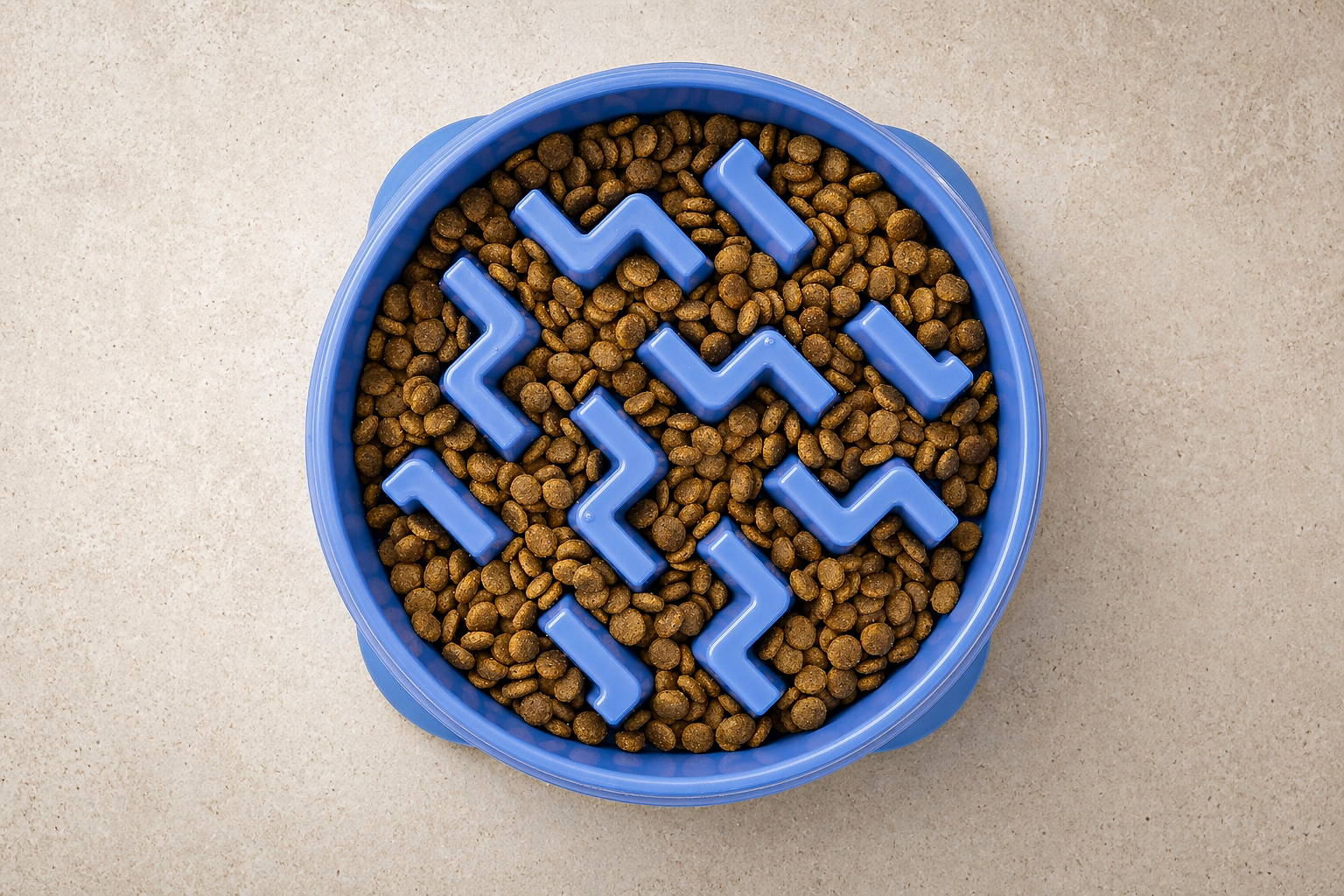
Outward Hound Fun Feeder Slo Bowl Large
Best Overall. A strong all-around large-dog slow feeder with proven maze structure, mainstream buyer trust, and the kind of everyday practicality that makes it the cleanest starting point for most owners.
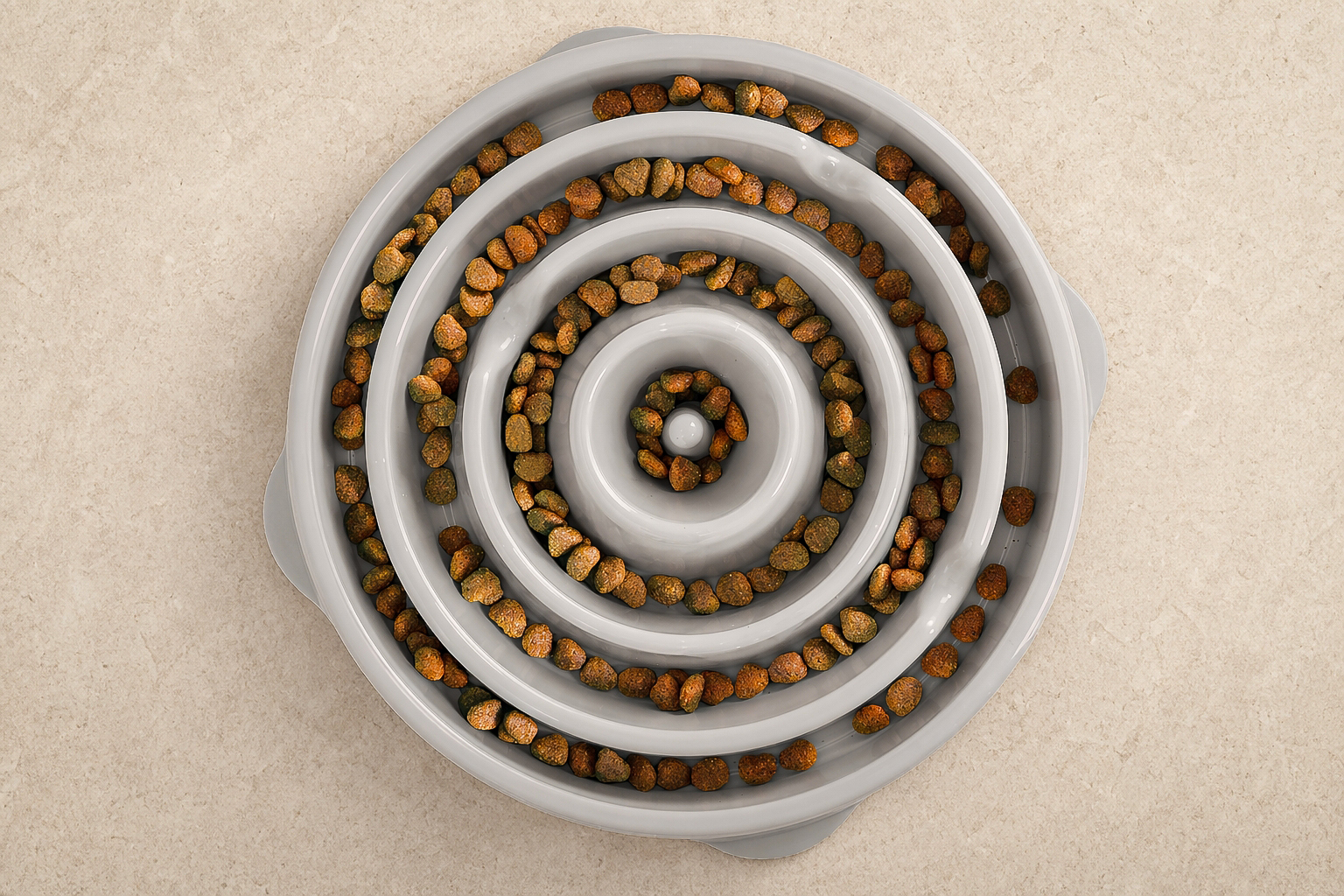
Outward Hound Slo Bowl Deep Pattern Large
Best for Fast Eaters. A more pattern-driven slow feeder choice for large dogs that still push through simpler bowls too quickly.
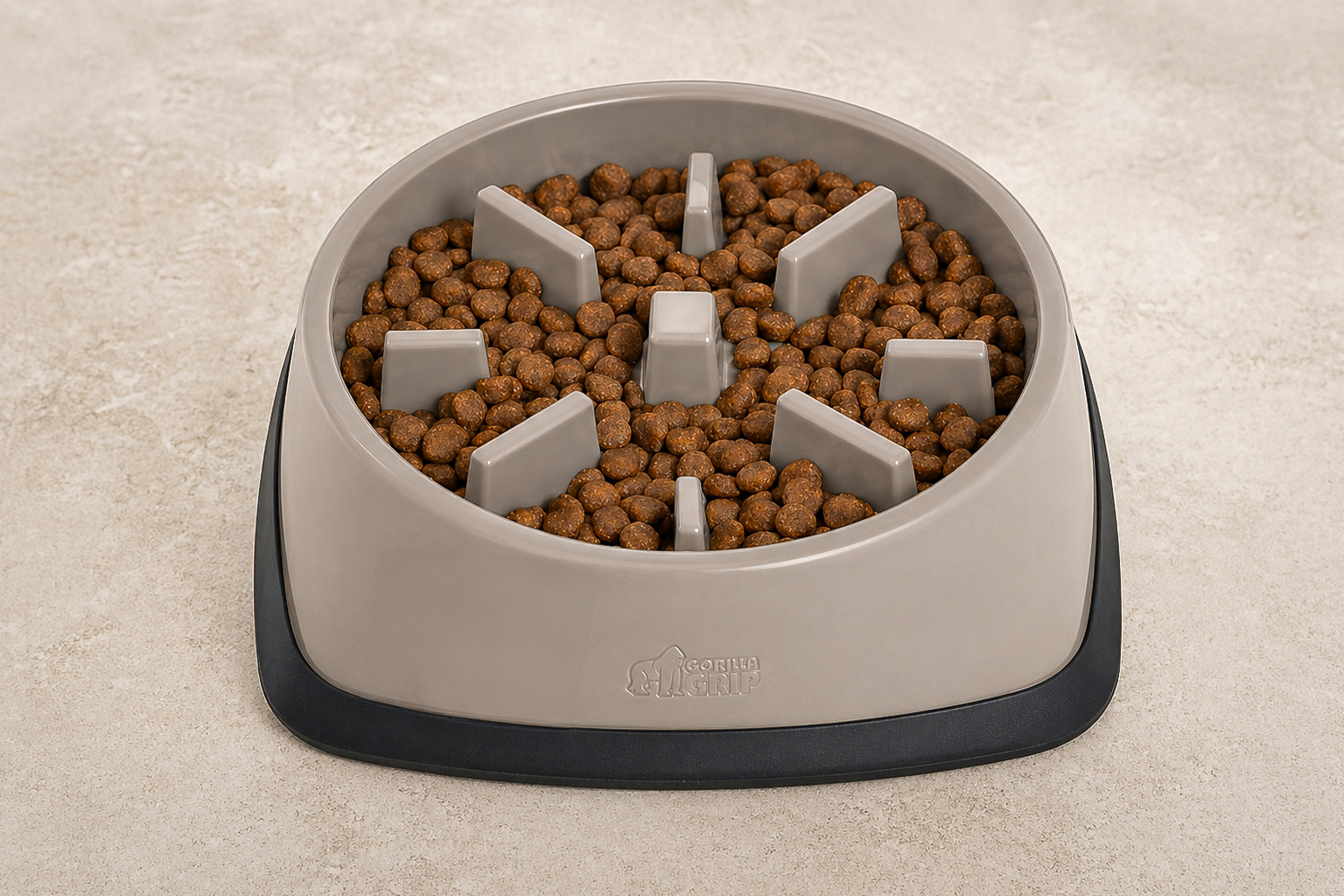
Gorilla Grip Slow Feeder Dog Bowl
Best for Stability. A better starting point when the dog tends to push, drag, or reposition bowls while eating.
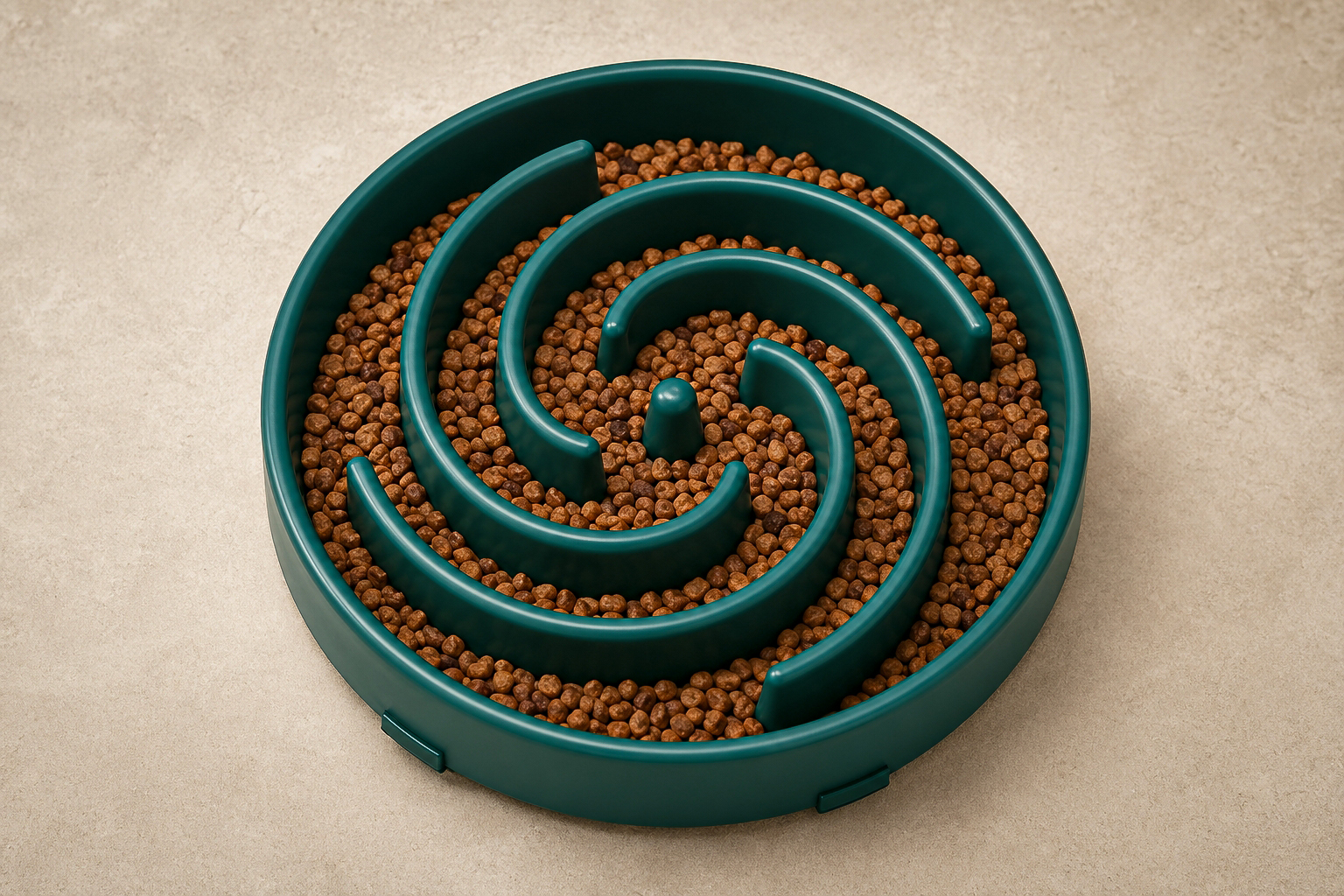
JASGOOD Slow Feeder Dog Bowl Large
Best Budget Pick. A lower-cost large slow feeder for buyers who want a more affordable entry point without defaulting to a random weak listing.
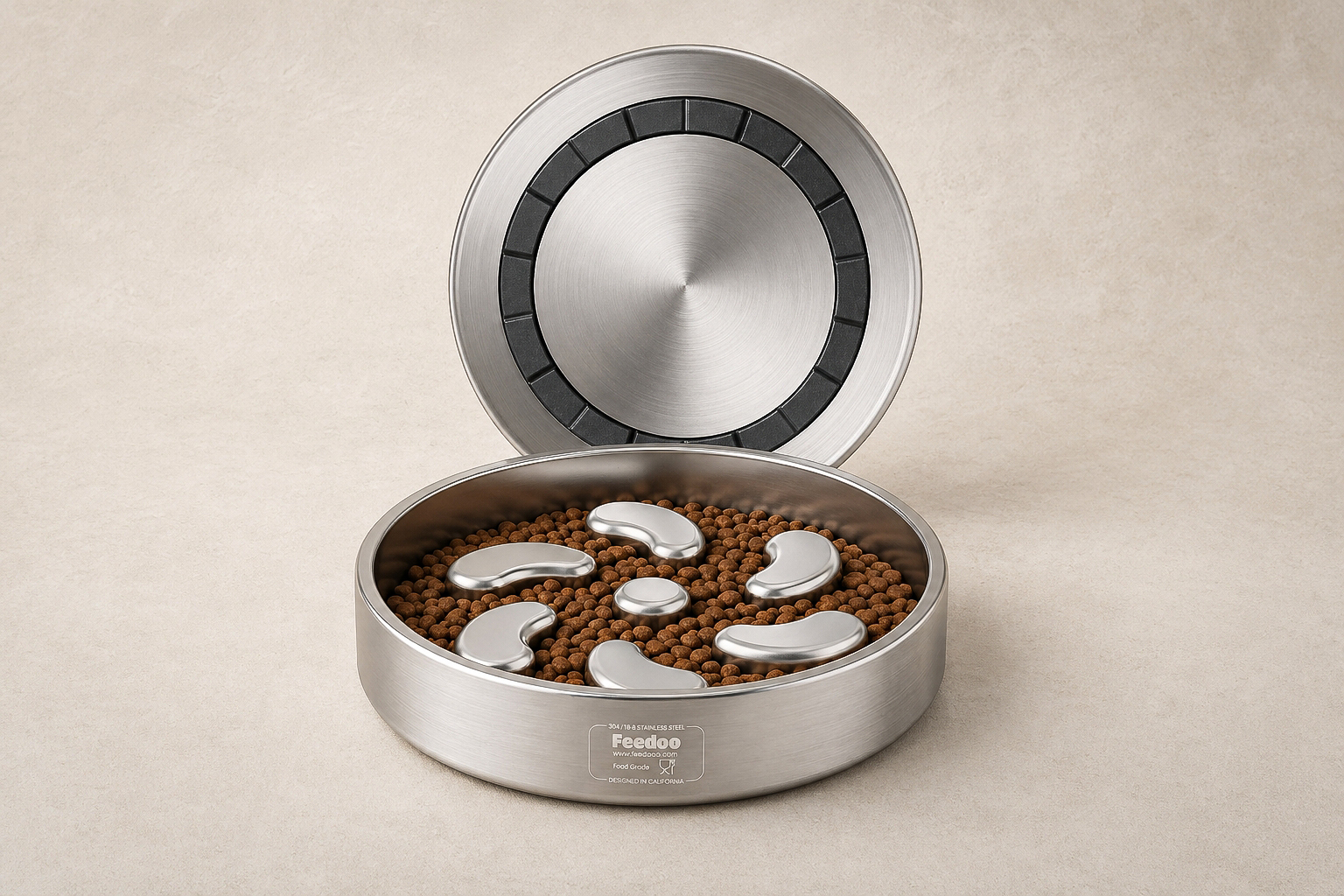
Feedoo Stainless Steel Slow Feeder Bowl
Best Stainless Pick. A more material-focused choice for owners who care about a sturdier feel and easier everyday cleanup.
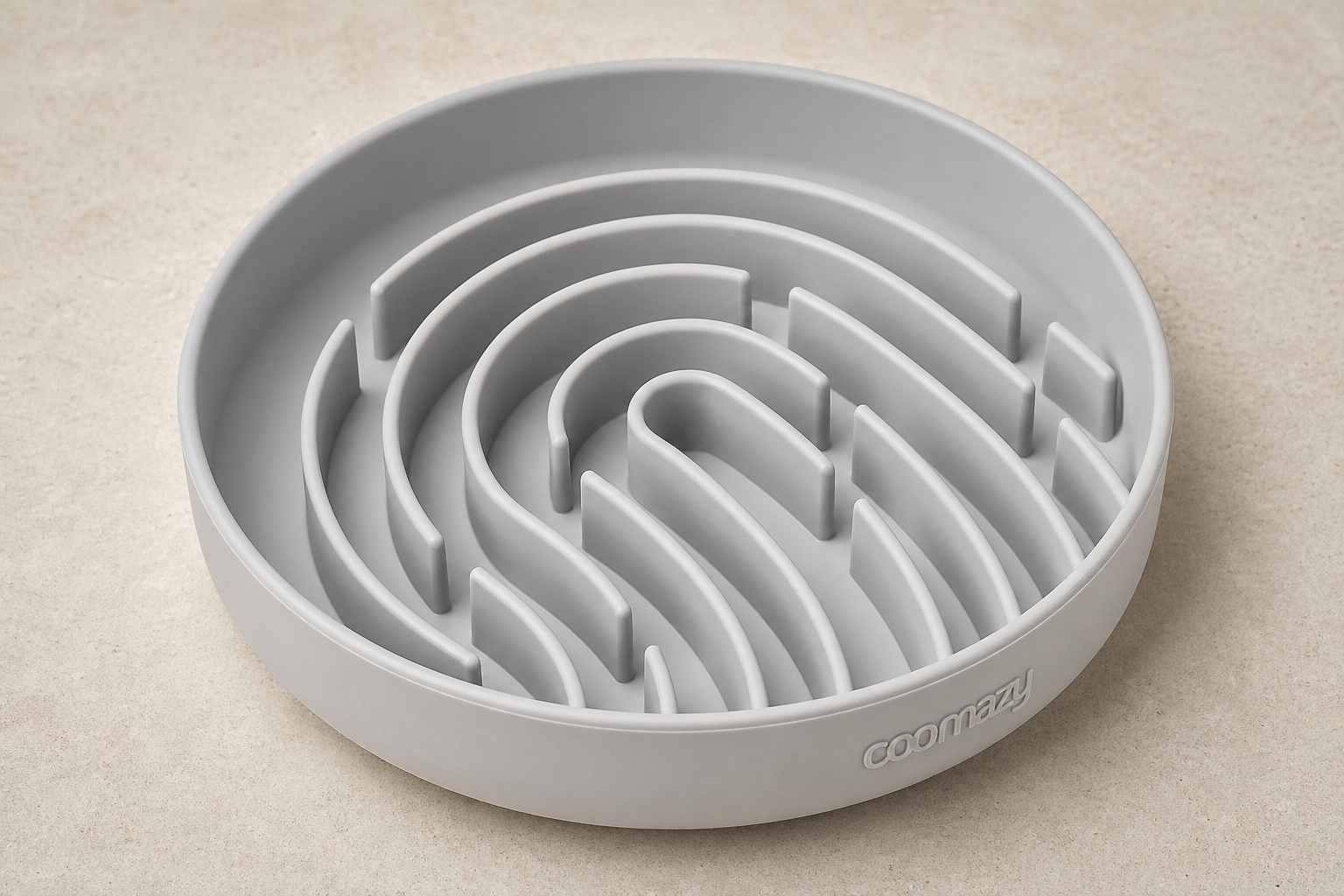
Coomazy Silicone Slow Feeder Mat
Best for Surface Grip. A different format that can make sense when suction-style hold and flexible placement matter more than a classic rigid bowl format.
Quick Comparison Matrix
| Product | Best For | Format | Slow-Down Strength | Stability / Grip | Capacity Feel | Cleaning Effort | Main Strength | Amazon |
|---|---|---|---|---|---|---|---|---|
| Outward Hound Fun Feeder Slo Bowl Large | Most large dogs | Maze bowl | High | Moderate | Good for full meals | Moderate | Best all-around balance | View |
| Outward Hound Slo Bowl Deep Pattern Large | Dogs still eating too fast with simpler bowls | Deeper maze bowl | High to very high | Moderate | Good | Moderate to higher | Stronger maze resistance | View |
| Gorilla Grip Slow Feeder Dog Bowl | Dogs that shove bowls around | Non-slip maze bowl | Medium to high | High | Good | Moderate | Better base grip | View |
| JASGOOD Slow Feeder Dog Bowl Large | Budget-minded buyers | Maze bowl | Medium | Moderate | Good enough for normal large meals | Easy to moderate | Lower-cost entry point | View |
| Feedoo Stainless Steel Slow Feeder Bowl | Owners wanting easier cleanup and steel feel | Stainless slow feeder bowl | Medium | Moderate | Good | Easy | Material and cleanup advantage | View |
| Coomazy Silicone Slow Feeder Mat | Dogs needing stronger surface hold or flatter feeding setup | Silicone mat / bowl-style feeder | Low to medium | High on smooth surfaces | Depends on meal style | Easy | Flexible suction-style use | View |
How We Picked These Slow Feeder Bowls for Large Dogs
1. Use-case fit came first
We did not treat all slow feeders as interchangeable. Large dogs create more force, eat larger portions, and clear open space faster. The first filter was whether a bowl made practical sense for those realities.
2. Safe bestseller bias
The goal here is not obscure novelty gear. The page leans toward mainstream, conversion-friendly picks with cleaner buyer trust than random low-confidence marketplace listings.
3. Different roles, not six clones
Instead of listing six bowls with almost identical shape and function, this page separates actual buyer needs: overall balance, stronger slow-down, higher grip, budget value, stainless preference, and surface-grip flexibility.
4. Everyday practicality mattered
Maze depth matters, but so do stability, cleanup effort, filling convenience, and whether the bowl still feels usable day after day. Real feeding utility mattered more than flashy pattern design.
Best Slow Feeder Bowl Options Explained
Outward Hound Fun Feeder Slo Bowl Large
This is the strongest all-around starting point for most large-dog owners because it balances the three things that usually matter most: real slow-feeding structure, mainstream buyer familiarity, and a format that still feels practical in daily use. It is one of the cleanest “start here first” picks when you want a true slow feeder without turning feeding into a weird experiment.
It makes the most sense for owners who want one reliable bowl that can cover normal large-dog meals, reduce inhaling behavior, and feel like a proven mainstream option rather than a risky niche listing. It is not necessarily the most specialized bowl on the page, but it is the easiest recommendation for the widest range of use cases.
- Best overall slow feeder for large dogs
- Good balance of maze resistance and daily practicality
- Safer mainstream starting point for most buyers
Outward Hound Slo Bowl Deep Pattern Large
This is the better pick when a large dog is still clearing simpler slow feeders too quickly. The stronger maze emphasis gives food-driven dogs more work to do, which is exactly what many owners are trying to create. It earns its place because it addresses the “my dog still finishes too fast” problem more directly.
It makes the most sense for large dogs that are highly food-motivated, highly energetic at mealtime, or simply too efficient with lighter maze patterns. The trade-off is that more pattern usually means slightly more cleanup effort and sometimes a slightly fussier feel when filling.
- Best for stronger slow-down effect
- Better for determined fast eaters
- More maze resistance than simpler bowl designs
Gorilla Grip Slow Feeder Dog Bowl
This is the stronger fit when bowl movement is part of the feeding problem. Some large dogs do not just eat fast. They also push, angle, drag, or reposition the bowl while working through the food. In that situation, stronger base grip can matter almost as much as the maze itself.
It makes sense for owners feeding on smoother floors or for dogs that physically move bowls around the room. If your current slow feeder is technically slowing the dog down but constantly sliding out of place, this is the kind of upgrade worth considering.
- Best for higher grip and stability
- Useful on smoother feeding surfaces
- Better for dogs that push bowls while eating
JASGOOD Slow Feeder Dog Bowl Large
This is the clean budget route for buyers who want a lower-cost slow feeder without dropping down to a listing that looks obviously weak or disposable. It is not the strongest specialist on the page, but it does give budget-focused buyers a reasonable entry point into the category.
It makes the most sense when price sensitivity matters more than chasing the strongest possible pattern depth, highest base grip, or more premium material feel. For many normal large-dog households, that may be enough. The question is whether you want simple value or a more targeted solution.
- Best budget pick
- Good for simpler large-dog feeding setups
- Cleaner low-cost choice than many random alternatives
Feedoo Stainless Steel Slow Feeder Bowl
This is the better pick when material preference is part of the buying decision. Some owners simply want a slower feeder with a sturdier stainless presentation, a cleaner-feeling surface, or a bowl that better matches the rest of their feeding setup. That does not automatically make it better at slowing every dog, but it can make it more appealing for daily ownership.
It makes the most sense for buyers who care more about a more solid-feeling bowl and easier cleanup than about getting the most aggressive maze structure available. If cleanup frustration is stopping you from actually using a slow feeder consistently, a simpler stainless route can be the smarter call.
- Best stainless slow feeder option
- Easier material choice for many owners
- Good for buyers prioritizing cleanup and feel
Coomazy Silicone Slow Feeder Mat
This is the alternative-format pick on the page. Instead of working like a traditional rigid bowl, it leans into a more flexible, suction-style, surface-grip approach. That can make sense for some feeding situations, especially when you care more about bowl movement control or flatter food distribution than a classic bowl shape.
It is not the default recommendation for every large dog. It earns its place because some owners want a different feeding format and because some dogs respond better when the feeding setup stays flatter, steadier, or more surface-bound.
- Best for surface-grip feeding setups
- Useful alternative to rigid bowl designs
- Can make sense for messy or pushy eaters
Best for Specific Large Dog Feeding Situations
Best for Most Large Dogs
If you want one bowl that balances strong slow-feeding behavior, mainstream trust, and normal daily practicality, the large Outward Hound pick is the cleanest place to start.
Best fit to start with: Outward Hound Fun Feeder Slo Bowl Large
Best for Dogs That Still Eat Too Fast
If your large dog already blows through simpler slow feeders or still eats like every meal is a race, a deeper-pattern option is the better place to start.
Best fit to start with: Outward Hound Slo Bowl Deep Pattern Large
Best for Slippery Floors
If the bowl moving across the floor is part of the problem, stronger base grip matters more than many buyers expect. A better anti-slip design can improve the whole feeding setup.
Best fit to start with: Gorilla Grip Slow Feeder Dog Bowl
Best for Budget-Focused Buyers
If you want to enter the category without paying up for stronger specialization, the JASGOOD bowl is the cleaner lower-cost route to start with.
Best fit to start with: JASGOOD Slow Feeder Dog Bowl Large
Best for Easier Cleanup Preference
If cleanup convenience and a more solid-feeling feeding bowl matter more to you than the strongest maze complexity, the stainless route is worth considering first.
Best fit to start with: Feedoo Stainless Steel Slow Feeder Bowl
Best for Surface-Hold Feeding Setups
If the dog tends to drag bowls or you want a flatter, more fixed feeding setup on a smooth surface, the suction-style silicone option is the more logical starting point.
Best fit to start with: Coomazy Silicone Slow Feeder Mat
What Actually Matters Most in a Slow Feeder Bowl for Large Dogs
Maze depth matters more than decorative shape
Large dogs can clear open areas fast. A bowl that looks intricate from above can still be too shallow to create a meaningful slow-down. For this category, depth and usable resistance matter more than a visually fancy pattern.
Bigger dogs need more usable meal space
A slow feeder should not just “fit kibble.” It should handle a realistic large-dog portion without food piling into one cramped corner. If the bowl feels too small for the meal, the feeding experience gets worse fast.
Stability is part of the feeding solution
Some large dogs do not just eat fast. They also push hard. If the bowl slides, rotates, or gets dragged across the floor, the slow-feeding benefit becomes less reliable. Grip is not a side feature. It is part of the core function.
The right slow-down level depends on the dog
Not every large dog needs the most aggressive maze pattern. Some just need enough interruption to stop inhaling meals. Others need a much more resistant structure because they learn simple bowl layouts very quickly.
Cleaning effort changes real long-term use
A bowl can work well in theory and still become annoying in practice if cleanup is awkward after every meal. The best choice is not always the most complex maze. It is the one you will actually keep using consistently.
Material changes the ownership feel
Plastic, stainless, and silicone create different trade-offs in grip, weight, cleanup, and feeding style. Buyers often underestimate how much the material changes the day-to-day experience of using the bowl.
Wide mouths can overpower weak layouts
Large dogs with broad muzzles often expose the weakness of small or lightly structured bowls. A bowl that works for a medium dog can feel far too easy for a large dog with bigger mouth reach.
A slow feeder should improve feeding, not create frustration
The goal is controlled pacing, not turning every meal into a battle. If the bowl feels awkward, too cramped, or too annoying for both dog and owner, it may be the wrong type of slow feeder for that routine.
Common Mistakes When Buying a Slow Feeder Bowl for Large Dogs
Buying a bowl that is technically “large” but not practically large enough
Some bowls are labeled for bigger dogs but still feel cramped once a real large-dog portion goes in. Usable meal space matters more than the marketing label.
Assuming any maze pattern will slow a large dog enough
Large dogs often overpower shallow or weak layouts. A bowl may look like a slow feeder and still fail to create a meaningful slow-down.
Ignoring bowl movement
If the dog pushes the bowl all over the feeding area, a better anti-slip design may matter more than choosing a slightly more complex maze.
Buying only by material preference
Stainless can be appealing and silicone can grip well, but the bowl still needs to solve the actual slow-feeding problem. Material is only part of the decision.
Choosing the most aggressive pattern without thinking about daily use
More resistance is not always better. A bowl that is too annoying to fill, clean, or use consistently may become a bad long-term fit even if it slows feeding down a lot.
Treating all large dogs the same
Breed shape, muzzle width, feeding speed, floor surface, and meal size all change what the best slow feeder looks like. “Large dog” is only the starting point.
Not thinking about portion size
A bowl that works for snack-sized meals may become messy or impractical for a full-size feeding routine. Real serving size matters in this category.
Buying a random low-trust listing to save a little money
Cheap slow feeders are everywhere. The issue is that many weak listings do not offer a clean enough reason to trust the build, design, or long-term usability.
Frequently Asked Questions
What is the best slow feeder bowl for large dogs?
For most owners, the best slow feeder bowl for large dogs is a large maze bowl with enough depth to create a real slow-down, enough usable space for a full meal, and enough stability to stay in place during feeding.
Do slow feeder bowls really work for large dogs?
Yes, but only when the bowl is strong enough for the dog’s size, eating style, and portion size. Large dogs often need deeper patterns and better stability than smaller dogs do.
Is a stainless slow feeder bowl better than plastic?
Not automatically. Stainless can feel easier to clean and more solid, while plastic bowls often offer more maze variation. The better choice depends on whether you value material feel or stronger slow-feeding structure more.
How deep should a slow feeder bowl be for a large dog?
It should be deep enough to make the dog work around the pattern instead of scooping food out too easily. Shallow bowls often do not slow determined large dogs very much.
What if my dog still eats too fast with a slow feeder?
That usually means the pattern is too easy, the bowl is too shallow, or the format is a poor fit for that dog’s muzzle shape and feeding style. A deeper or more resistant design is often the next place to look.
Are silicone slow feeders good for large dogs?
They can be, especially when strong surface grip matters. They are usually not the default best choice for every large dog, but they can work well in feeding setups where a more flexible, suction-style format makes practical sense.
Should a slow feeder bowl be non-slip for a large dog?
In many cases, yes. Large dogs often apply more force while eating, so non-slip performance can make a noticeable difference in real daily use.
Can a slow feeder help reduce bloating risk?
A slow feeder can help reduce how quickly a dog eats, which may support calmer feeding and better pacing. It is not a guaranteed fix for every digestion issue, but it can be a useful tool when fast eating is part of the concern.